Ring Spun Cotton vs Regular Cotton: 5 Differences You Can Feel
Ring spun cotton is twisted into a finer, smoother yarn than the regular open-end cotton in cheap tees. Here's how that changes softness, strength, print quality and price.
By SkyMade Design · · 7 min read
Ring spun cotton vs regular cotton comes down to how the yarn is twisted, not where the cotton grew. Ring spun yarn is twisted slowly and tightly into a fine, smooth thread, so the shirt feels softer, lasts longer and takes a print more cleanly. Regular cotton tees usually use open-end yarn, which is faster and cheaper to make, and you can feel the difference the first time you pull one on.
Here's what happens to the fibre in each process, the 5 differences that matter once it's a T-shirt, and where tri-blend fits in.
How regular cotton yarn is made
Every cotton tee starts the same way. Raw cotton is cleaned, then carded: run through rollers covered in fine wire teeth that pull the fibres roughly parallel into a loose rope called a sliver.
Most budget tees go straight from there to open-end spinning (also called rotor spinning). A fast-spinning rotor pulls fibres off the sliver and twists them into yarn in one step. It's quick and cheap, and it handles shorter fibres well. The trade-off is a yarn with fibre ends sticking out along its length. Knit that into fabric and you get a slightly rough, fuzzy surface. That's "regular cotton" in most shop listings.
How ring spun cotton is made
Ring spinning adds steps and slows everything down. The sliver is drawn out thinner, then a spindle twists it continuously while a small traveller runs around a ring (that's where the name comes from). The fibres wrap around each other over and over, so the ends get tucked into the yarn instead of poking out.
The result is a finer, tighter, smoother yarn. Finer yarn means a fabric can be knit lighter and denser at the same time, which is why ring spun tees often feel thin and soft without being flimsy.
What "combed" adds
Combed ring spun cotton goes through one extra step before spinning. Fine-toothed combs pull out the shortest fibres and leftover bits of debris, leaving only the longer ones. Long fibres twist together more securely, so combed yarn is smoother and less prone to pilling than carded ring spun yarn. When a label says "combed and ring spun", it's describing the top of the cotton range for everyday tees.
Ring spun cotton vs regular cotton: 5 differences you'll notice
| Regular (open-end) cotton | Ring spun cotton | |
|---|---|---|
| Feel | Slightly rough, a bit stiff when new | Smooth and soft from the first wear |
| Weight | Usually heavier for the same coverage | Lighter and finer for the same opacity |
| Durability | Loose fibre ends wear and pill sooner | Tighter twist holds up through more washes |
| Print surface | Fuzzier face, so ink edges can look soft | Flatter face, so fine lines stay crisp |
| Price | Cheapest blank available | Costs more per shirt |
1. Softness
This is the one you notice in the shop. Open-end yarn feels scratchier because of all those exposed fibre ends. Ring spun yarn has fewer, so the fabric feels smooth against skin, and it gets softer with washing rather than rougher.
2. Weight and drape
T-shirt weight is measured in ounces per square yard (oz/yd²). Around 4.2 oz is lightweight, 5 to 6 oz is a classic heavy tee. A lightweight tee knit from open-end yarn tends to feel thin and see-through. Ring spun yarn is fine enough to make a light fabric that still drapes well and keeps its shape. If you like a tee that hangs instead of boxing out, you're usually looking for ring spun.
3. Durability
The tight twist that makes ring spun yarn smooth also makes it stronger for its thickness. Fewer loose ends means less pilling and less of that fuzzy, tired look after a dozen washes. Heavy open-end tees can last a long time too, but they wear by getting rough and thin in patches.
4. Print quality
A smoother fabric surface gives ink a flatter place to land. That matters most for detailed artwork printed by DTG or DTF, where thin outlines and small text can blur on a fuzzy face. If you're curious how those methods differ, our guide to DTG vs screen printing covers it.
5. Price
Ring spinning is slower and needs more processing, so a ring spun blank costs more than an open-end one. On a finished printed tee, that's often a few dollars of the price. Whether it's worth it depends on how often you'll wear the shirt.
Is ring spun cotton better?
For a tee you plan to wear every week, yes, usually. It feels better, prints better and keeps its look longer. Regular open-end cotton still makes sense for workwear, one-off event shirts or anything that'll get paint on it by Friday.
Ring spun isn't magic, though. A cheap ring spun tee knit loosely can still twist at the side seams or shrink. Check the weight, the fit and the care label as well as the yarn.

Our Wicked Good Pickleball witch tee is a good example of the lightweight end: 100% Airlume combed ring-spun cotton at 4.2 oz, retail fit, crew neck. The hand-drawn witch has thin lines and small bats, and the smooth fabric keeps them sharp.
Where tri-blend fits in
Most of our designs aren't printed on 100% cotton at all. They're on a tri-blend: 50% polyester, 25% cotton, 25% rayon. Each fibre does a job:
- Polyester keeps the shirt light, limits shrinking and helps it hold its shape.
- Cotton adds breathability and a natural hand.
- Rayon gives the drape and that slippery-soft feel tri-blends are known for.
Tri-blends are some of the softest tees you can buy, and they look slightly heathered, which suits retro and vintage-style artwork. There's an honest trade-off: lighter tri-blend colours are semi-sheer, so if you want full coverage, pick a mid or dark colour. Ink also sits differently on a blend than on pure cotton, so prints can look a touch softer and more worn-in. For a sun-faded 80s design that's a feature.

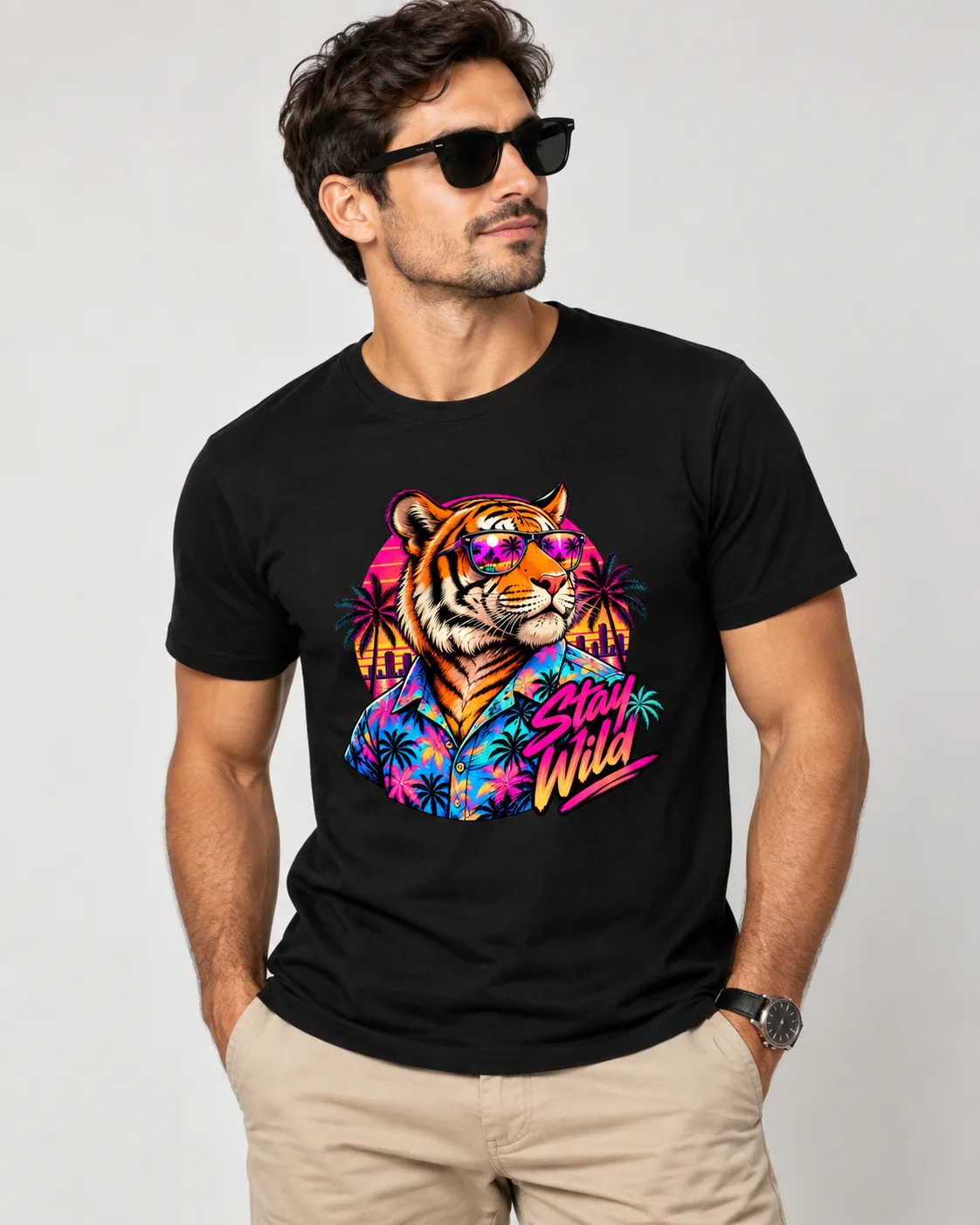
The Stay Wild Tiger is printed this way: a neon tiger in sunglasses and a Hawaiian shirt, where the faint heather of the blend adds to the retro look. More in that style lives on our GTA style shirts page.
How to tell what you're buying
Most listings say what the yarn is, if you know where to look:
- Read the fabric line. "Combed ring-spun", "ring-spun" or "Airlume" means ring spun. Plain "100% cotton" with no more detail is usually open-end.
- Check the weight. Under 4.5 oz is light and drapey; over 5.3 oz is heavy and structured.
- Feel the surface. Ring spun feels smooth and cool. Open-end has a dry, slightly fuzzy face.
- Hold it to the light. A dense knit blocks more light at the same weight.
Once you own it, washing matters as much as yarn. Cold water and a low tumble dry keep both the fabric and the print in shape; our guide on how to wash graphic tees has the full routine. If you're unsure about fit, the T-shirt size guide helps you measure a tee you already own.
Every shirt in the shop lists its fabric, weight and care on the product page, so you can pick the blank that suits you before it goes to the press.
FAQ
What is the difference between ring spun cotton and regular cotton?
Ring spun cotton is twisted slowly and tightly into a fine, smooth yarn, while regular cotton is usually open-end spun, which is faster and leaves loose fibre ends. Ring spun fabric feels softer, lasts longer and prints more crisply.
Does ring spun cotton shrink?
It can, like any cotton. Preshrunk blanks shrink less, and washing cold and drying on low keeps shrinkage to a minimum.
Is combed ring spun cotton better than ring spun?
Combed ring spun cotton has the shortest fibres removed before spinning, so it's smoother and pills less. It's a step up from carded ring spun cotton.
Is tri-blend softer than ring spun cotton?
Most people find tri-blend softer and drapier because of the rayon. Ring spun cotton feels more like classic cotton and gives fuller coverage in light colours.
Why are ring spun T-shirts more expensive?
Ring spinning is slower and needs extra steps like drawing and, for combed yarn, combing. That added processing raises the cost of the blank.